

In the early weeks of the course, everything begins with a pencil, gentle shading and learning how to observe shapes and tones. Drawing becomes clear, and for many of our students, it’s the first time they really “get it”.
Then, we introduce colour. For some, that step can feel exciting, but for others it can also feel uncertain. Colour can seem harder to control.
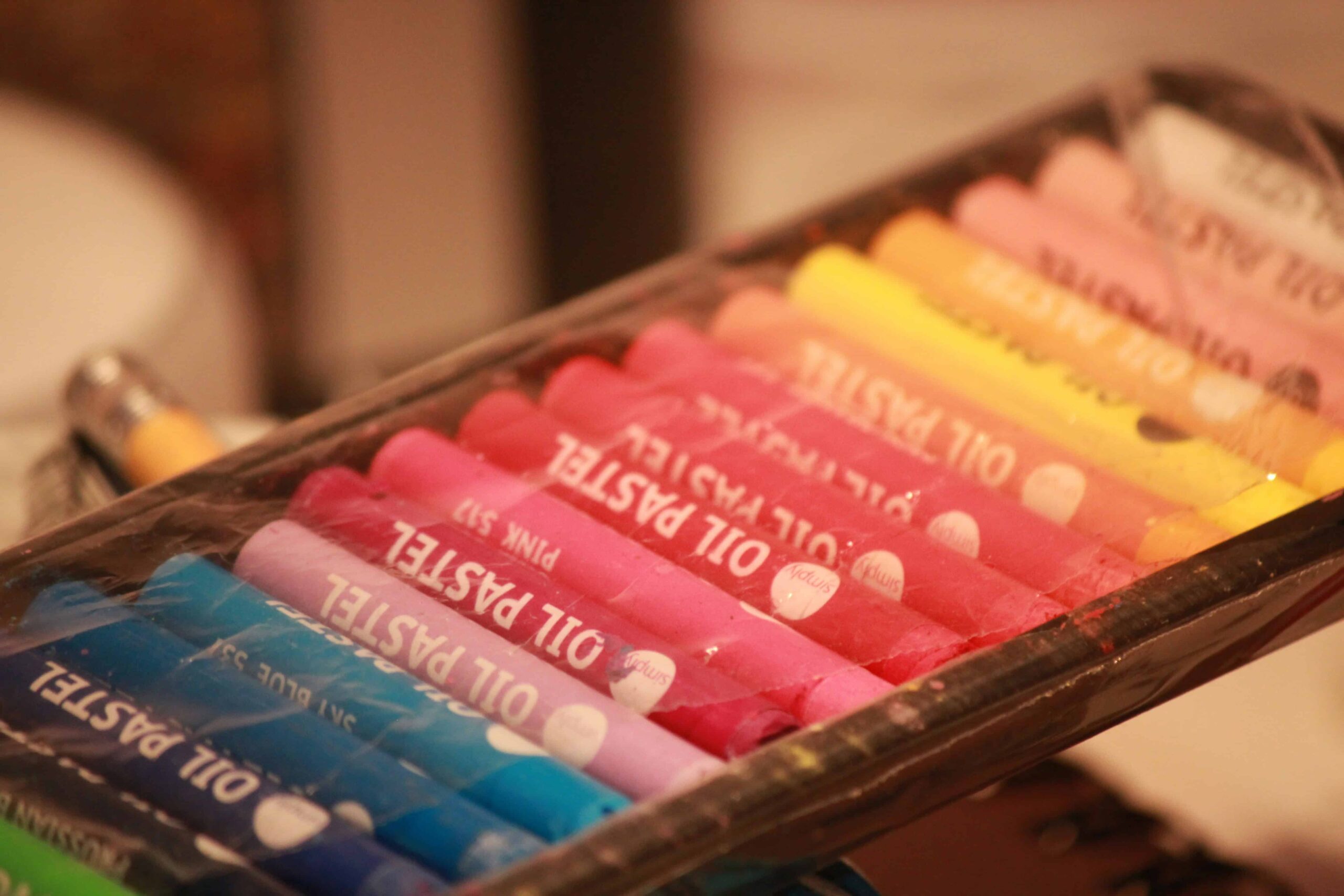
Our oil pastel module is one of the moments in the course where things start to feel different. Keep reading to find out what to expect from our oil pastel modules and how we work alongside each other to build confidence.
From Scepticism to Surprise
When oil pastels are first introduced, there’s often a shared reaction around the table. A few smiles, a bit of hesitation, and usually someone saying, “I haven’t used these since school.”
Many people come in expecting something quite basic, perhaps a little messy, something that won’t feel quite as enjoyable as drawing. It’s a very common feeling, and one that’s always met with reassurance.
What’s lovely is how quickly that changes.
As everyone settles in and begins to experiment, the atmosphere shifts. There’s conversation, a bit of laughter, and those small moments where someone looks down at their page and quietly says, “Oh… I quite like that.”
That’s often all it takes.
A Medium with a Story to Tell
It can be interesting to learn that oil pastels were never intended as a children’s craft.
In the 1940s, Pablo Picasso worked with Henri Sennelier from Sennelier to create something that had the richness of paint but was simple to use.
When students hear that, there’s often a moment of surprise. The material they weren’t quite sure about suddenly feels a little more exciting, a little more worth exploring.
But more than anything, it becomes another shared moment in the room; something to chat about, something to connect over as everyone begins trying it out together.
Settling In and Having a Go
The sessions themselves are never rushed. Everyone works at their own pace, with gentle guidance throughout.
You might see someone blending colours softly with their fingers, someone else trying something a little bolder, and another person simply enjoying getting used to the feel of the pastel on the page.
There’s no right or wrong way to begin. It’s just about having a go, and because everyone is doing it together, that initial uncertainty never lasts long. It’s replaced by curiosity and a growing sense of ease as the session unfolds.
Getting Comfortable with Colour
By the time oil pastels are introduced, something else has already started to settle in – not drawing, but the feeling of being part of the community.
Faces are familiar. Conversations come a little easier. There’s a sense of knowing you’re walking into a room where you’re comfortable, where people recognise you, and where you can simply be yourself.
So when colour is introduced, it doesn’t feel like a big leap. It feels like something you’re stepping into together.
You’re not figuring it out alone – you’re alongside others who are in the same place, sharing the same small wins, the same moments of curiosity, and often the same laughs along the way.
That’s usually what people remember most. Not getting something “right”, but how it felt to sit down, pick up a colour, and simply enjoy the moment together.
Early Moments of Enjoyment
What stands out during these sessions isn’t anything technical. It’s the atmosphere.
It’s the conversations that happen naturally while everyone is working. The encouragement was shared across the table. The small, genuine moments where someone feels a little more at ease than they did the week before.
People begin to settle into the rhythm of it all. Turning up, having a chat, getting started, and enjoying that time set aside to do something different.
Practical, Portable, and Playful
Oil pastels fit naturally into this kind of environment. They’re simple to use, easy to pick up, and don’t require lots of preparation.
There’s no waiting around, no complicated setup, just the chance to sit down and begin. That simplicity helps everything feel more relaxed, which is exactly what the sessions are about.
It also means people can take what they’ve done home with them straight away, often chatting about it as they leave, or looking forward to coming back the following week.
Learning Without Pressure
Along the way, there are small things to pick up. How different papers feel, how colours sit together, but it never feels heavy or technical.
It’s more about noticing rather than learning. Seeing what works, what feels enjoyable, and what you might like to try next time.
That gentle approach is what helps people feel comfortable. There’s no expectation, just quiet encouragement and the freedom to explore.
Creating Together
What makes the sessions really special is who you’re creating alongside. Many people join for the materials or the novelty of trying something new, but stay for the company.
The room becomes a relaxed, social space. Conversations flow, people share discoveries, and laughter often fills the studio. There’s no comparison, no expectation – just the shared joy of trying something new together.
A Step Towards a Creative Habit
Oil pastels are just one part of the course, but for many, they mark a shift. Colour begins to feel more approachable, and the sessions themselves start to feel like a natural part of the week.
Over time, that hour or two becomes something people look forward to. A chance to step away from everything else, to chat, to create, and to simply enjoy being there.
And often, that’s where confidence really grows – not in what’s being created, but in how it feels to keep showing up, to try something new, and to be part of something welcoming.
At The Seasons Art Class, that sense of ease and community sits at the heart of everything we do.
Sometimes all it takes is one session to feel part of something, so come and join us by booking a class today.