

There’s something really grounding about sitting down with a pencil or a paintbrush. You start with a simple line, add a bit of colour, and before you know it, your mind is on something else, and everything feels a little further away for a while.
A lot of people notice that this is the moment things start to feel calmer. Not because anything around them has changed, but because they’re focused on something simple in front of them instead.
In a world that’s constantly busy, that ability to properly switch off matters more than ever. What’s interesting is that switching off doesn’t always come from sitting there, doing nothing. Often, it comes from doing something small and creative instead.
Keep reading to find out more about how drawing and painting can help you decompress.
Why Switching Off Isn’t Always About Doing Less
Most of us think of rest as stopping completely. Sitting down, watching something, just letting time pass. Sometimes that is exactly what you need, but it doesn’t always leave you feeling refreshed in the way you expect.
Quite often, what can actually help is just shifting your focus and doing something that gently holds your attention so everything else can settle in the background for a bit. That’s where creativity, like drawing and painting, comes in.
How Art Gently Shifts Your Focus
If you’ve ever sat down to draw or paint, you’ll know what we mean. Your attention slowly moves away from everything else going on and just lands on what’s in front of you. A line taking shape. A shadow forming. Colour building up bit by bit.
It’s not forced, it just happens naturally, and your mind gets a bit of a break from the usual constant noise. You’re still focused, but calmer.
A Natural Way to Be Present (Without Trying Too Hard)
People often talk about “being in the moment” or “switching off your mind”, but in reality, that can be quite hard to do on purpose.
When drawing and painting, you don’t really have to try to be present. You just end up there because you’re paying attention to small things – the movement of your hand, the way colours mix, the feel of what you’re using. It’s a bit like mindfulness, but without the pressure of trying to do it “properly”. You’re just quietly focused on what’s in front of you.
The Quiet Satisfaction of Creating Something Yourself
As that focus settles, something else tends to follow. A quiet sense of satisfaction in making something from scratch. It doesn’t need to be perfect.
What matters is the time you’ve set aside for yourself, doing something for no other reason than you wanted to try it. Each piece becomes a small reminder of that time, and of the decision to pause and create, even briefly.
Making Space to Reset Each Week
For many people, this kind of activity becomes more than an occasional moment. It becomes part of the week. A regular space to step away from everything else, sit down, and do something different for a while. No pressure, no expectations, just focusing on something simple and absorbing.
Over time, it turns into something to look forward to. A familiar routine that leaves you feeling a little calmer, a little clearer, and often a little lighter than when you arrived. That feeling doesn’t always stay in the room – it tends to follow you into the rest of the week too.
The Unexpected Power of Creating Alongside Others
One of the things people often don’t expect is just how much the atmosphere matters. It’s not only about drawing or painting, it’s about who you’re doing it alongside, and how that changes the whole feel of the session.
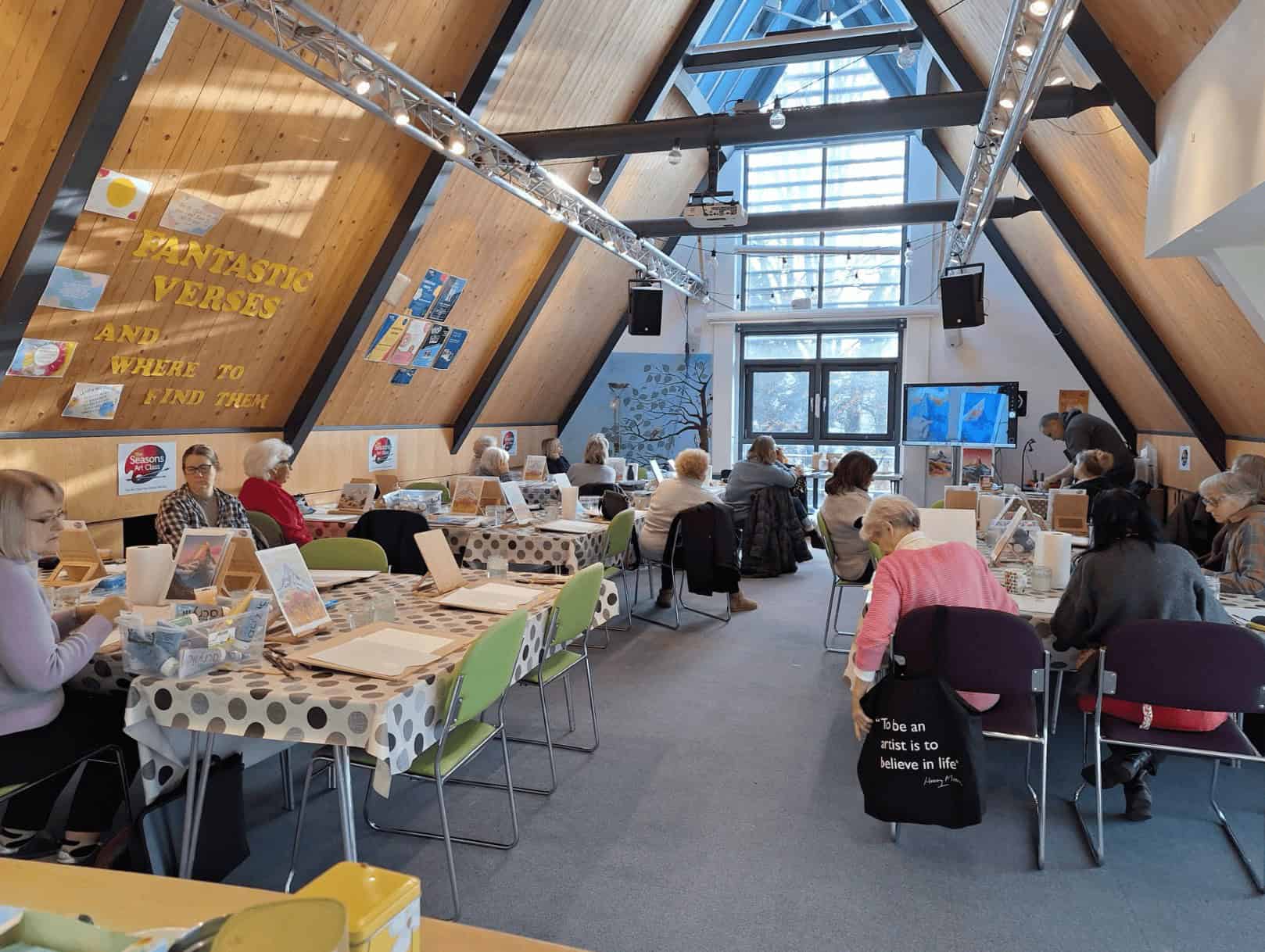
From the moment you arrive at The Seasons Art Class, everything is set up to feel relaxed and welcoming. There’s usually a bit of time to settle in properly, have a cup of tea, and ease into the space before anything begins. No one is put on the spot, and there’s never any expectation that you should already know what you’re doing. It’s simply about arriving, getting comfortable, and taking things at your own pace.
Something quite natural starts to happen. People talk, not in a forced or formal way, just small, easy conversations while they’re working. A bit of encouragement gets shared across the table without anyone needing to prompt it. Sometimes it’s just a comment about what someone’s working on, other times it’s a shared laugh over something that didn’t quite go to plan.
When you feel relaxed in the space and comfortable with the people around you, it becomes much easier to enjoy the process of painting and drawing without overthinking it.
How the Benefits Carry Into Everyday Life
What starts in the classroom doesn’t always stay there. Many people find themselves picking up a sketchbook at home, even if it’s just for a few minutes.
Others notice small changes in how they move through their day. Taking time to slow down, even once a week, begins to shape how the rest of life feels.
H2 – It’s Not About Being an Artist
Just to be really clear, you don’t need any experience for this. You don’t need to be “good at art”, you don’t need confidence, and you definitely don’t need to arrive knowing where to start. That’s not what our classes are about.
What people often find quite quickly is that things start to make sense in a really natural way. You’re guided step by step, and each session builds gently on the one before it. Nothing is rushed, and there’s no pressure to get everything right. It’s much more about understanding what you’re doing as you go, rather than trying to perfect it straight away.
Giving Yourself Permission to Slow Down
We’re all quite used to filling our time. Being busy feels normal. So slowing down can sometimes feel like you’re meant to be doing something more useful instead.
Taking time to sit down, pick up a pencil, and focus on something creative is one of the simplest and most effective ways to restore a sense of balance.
Take a little time to explore your nearest class and see if it feels like the right fit for you. We’d love to have you with us.