

Some days, ideas flow effortlessly. You pick up a pencil or brush, and the page seems to fill itself almost without thought. On other days, it’s quieter. The canvas stays blank a little longer, and the first stroke doesn’t come as easily.
If this sounds familiar, don’t worry – it happens to every artist, whether you’re just starting out or have been creating for years. These moments aren’t a sign that your creativity is gone. They’re just part of the natural ebb and flow of making art.
The trick is learning how to gently reopen that creative window. Here’s how.
1. Step Away for a Moment
When you feel stuck, your instinct might be to push harder, trying to force something onto the page. Creativity often works best when given a little space.
Take a short break. Go for a walk, cook a meal, tidy up, or do something completely unrelated to art. You’ll be surprised how often ideas pop up once you stop trying so hard. Sometimes, letting your mind wander quietly is exactly what it needs.
2. Return to Simple Exercises
Creative blocks often appear when there’s too much pressure to produce something “good”.
Lower your expectations for a moment. Try simple exercises – sketch basic shapes, experiment with colour or make quick five-minute drawings. These small steps can gently wake up your creative instincts.
Even just making marks on the page – lines, patterns or loose shapes – is enough to get started. Slowly, the page doesn’t feel so empty anymore, and your process quietly begins.
3. Let Something Unexpected Appear
When you begin with simple marks or shapes, something interesting often starts to happen.
A line might curve in a way that suggests a form or a shaded area might hint at something familiar, like seeing shapes in clouds.
From there, you can decide what comes next – develop the shape into something recognisable, or simply explore an abstract path. Not every piece needs a clear subject. Sometimes, creating something that just looks interesting is enough to spark new ideas.
4. Change Your Environment
A small change in surroundings can make a surprising difference.
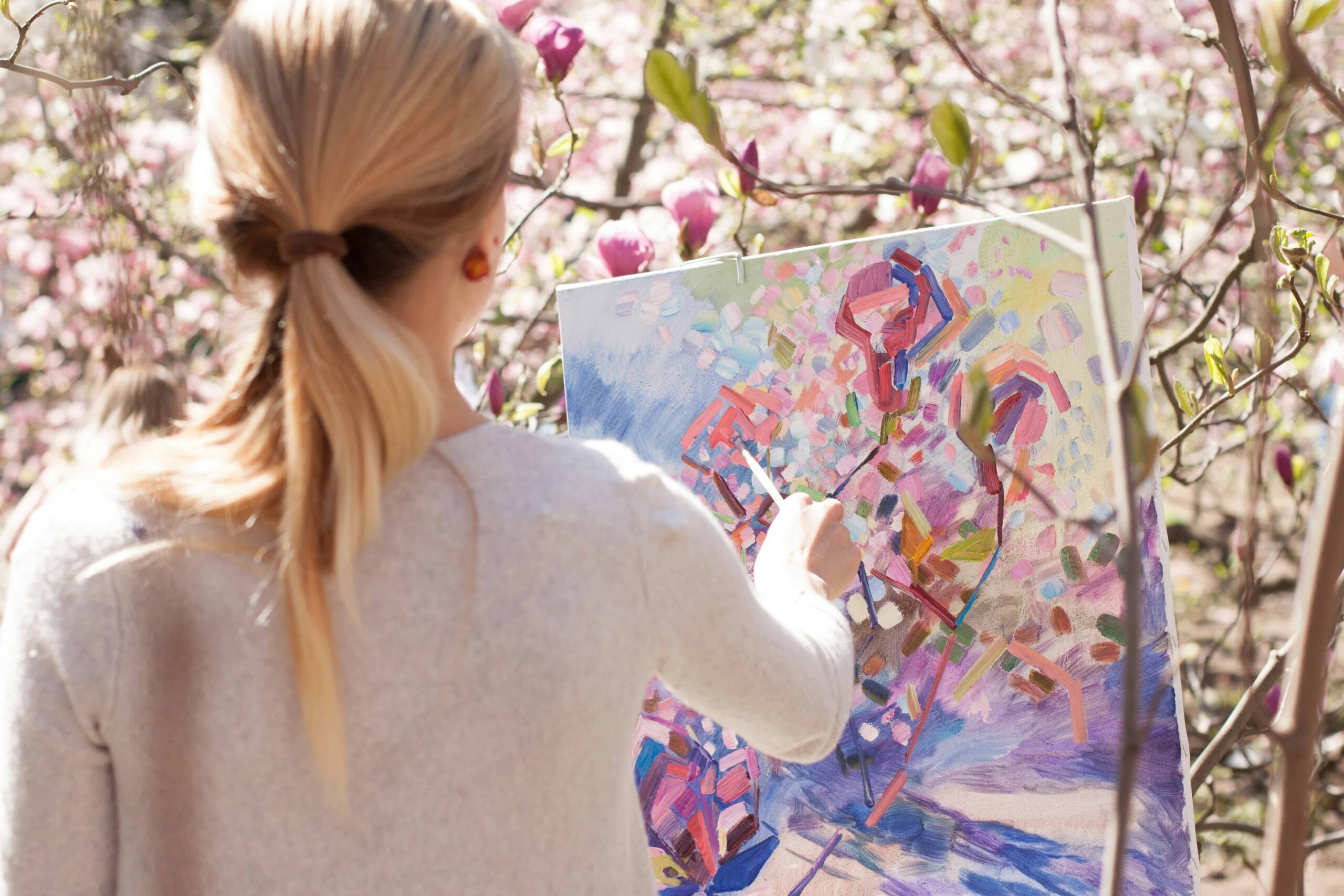
Moving to another room, sitting near a window, working outdoors, or even visiting a café can refresh your perspective and shift your mindset.
Another useful technique is using a viewfinder. By framing small sections of your surroundings, you begin to notice shapes that might otherwise go unnoticed.
5. Limit Your Options
Sometimes, creative blocks happen because there are just too many choices.
When anything is possible, it’s easy to feel overwhelmed. Setting small restrictions can actually make creativity easier.
You might choose to work with just one colour, use only one brush, draw with your non-dominant hand, or give yourself ten minutes to explore an idea. These small boundaries often remove pressure and allow ideas to flow more freely.
6. Look to Other Artists for Inspiration
Seeing how other artists approach their work can be incredibly motivating.
Visit exhibitions, flip through art books, follow artists online, or explore different styles. The aim isn’t to copy them – it’s to observe how they solve visual problems:
• How do they use colour?
• How do they simplify shapes?
• How do they guide the viewer’s eye?
Noticing these choices can quietly influence your own work and open new creative doors.
7. Accept Imperfection
Perfectionism is one of the biggest culprits behind creative blocks.
If every piece must be perfect, it’s no wonder getting started feels impossible. Allow yourself to create something imperfect.
Many painters start by applying a loose base colour across the canvas. This removes the stark white surface and makes the painting feel less intimidating.
Those early layers often remain visible later, adding depth and character to the finished piece. The important thing is simply to begin.
8. Build a Creative Routine
Inspiration can sometimes feel unpredictable, but many artists rely on routine rather than waiting for the perfect moment.
Setting aside regular time to draw or paint helps the mind settle into a creative state more easily. Even short sessions can be effective when they happen consistently.
Over time, creativity becomes less about waiting for ideas and more about creating the conditions where ideas naturally appear.
For many people, this regular creative time becomes something they genuinely look forward to.
9. Trust the Process
Creative blocks can feel frustrating, but they rarely last forever.
Often, they’re just quiet pauses – moments when ideas are forming beneath the surface. With patience and gentle persistence, your creativity will return.
The most important thing is to keep showing up, even when inspiration feels distant. Picking up a pencil or making a few marks keeps the door open for the next idea to arrive.
Learning in a Supportive Creative Environment
Creating alongside others can make a real difference. A relaxed, welcoming environment helps you feel confident to experiment and develop your skills.
That’s why so many of our students return to classes at The Seasons Art Class. In fact, 80.51% of students from the Autumn 2025 term continued into Spring 2026.
Sometimes rediscovering your creativity comes from sitting down with the right guidance and being surrounded by friendly, supportive artists.
Find a class and explore the different modules available, and see how creating alongside others can bring fresh inspiration. We look forward to hearing from you soon.